


Head Researcher
Pink flamingos have spent decades standing on one leg in front yards, printed across beach towels, and glowing in neon above motel signs. Somewhere along the way, the internet decided they also mean something else entirely: a quiet nod toward partner swapping.
This blog post untangles what’s actually known, what’s rumor, and why the bird became a lightning rod for lifestyle speculation.
Table of Contents
What Does a Flamingo Symbol Mean?
Before anyone linked flamingos to adult social scenes, the bird already carried a long résumé of meanings.
In nature, flamingos are social to an extreme. They live in colonies that can number in the tens of thousands; they perform synchronized courtship displays, and they’re known for forming pair bonds that sometimes last years. That combination—intensely communal, visually flamboyant, ritualistic in mating behavior—makes them irresistible to symbolists. The plastic lawn flamingo has a separate cultural history.
In 1957, sculptor Don Featherstone, working for Union Products in Leominster, Massachusetts, modeled a plastic bird from National Geographic photographs because he could not obtain a live flamingo. It became enormously popular and eventually developed from suburban garden decoration into an icon of American pop culture kitsch [1]. Its brightness did most of the early work. Pink already carried associations of playfulness and leisure in mid-century American design. The bird’s long legs and one-legged stance later invited other readings, such as balance, grace, and the slightly comic dignity of standing still while looking extravagant.
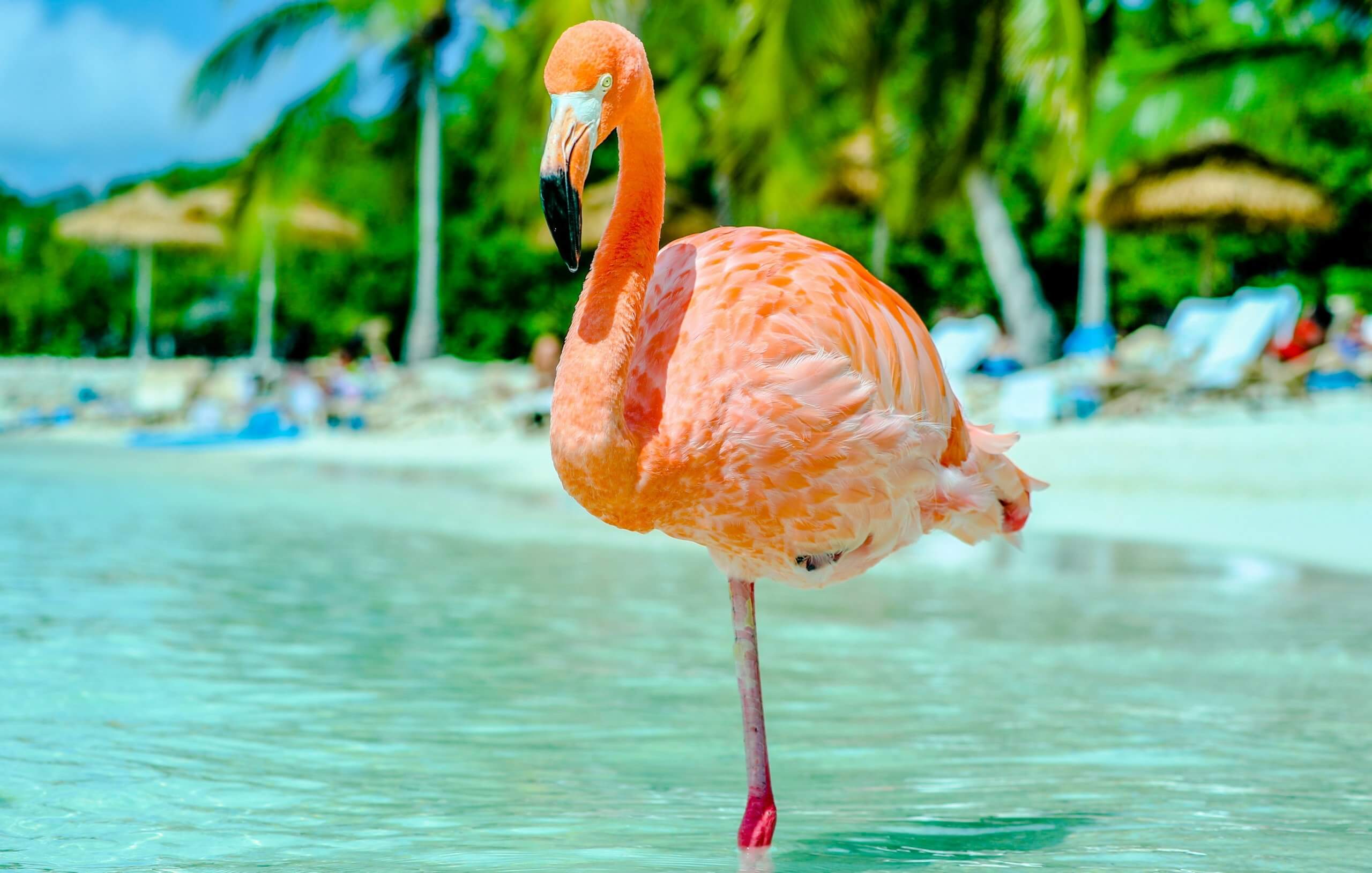
A group of flamingos is called a flamboyance, a fact that writers have used for decades to talk about visibility and spectacle. Context quickly multiplied those meanings. John Waters’s 1972 film Pink Flamingos locked the ornament to camp, bad taste, and queer excess. Counterculture and later LGBTQ communities adopted the bird as an anti-suburban gesture.
In 1979, University of Wisconsin students planted a thousand of them on a dean’s lawn; an action that helped popularize “flocking”—the prank of covering a yard overnight. Madison later named the plastic flamingo its official bird [2]. The same object could signal irony, affection for Florida, working-class taste, or resistance to good-taste rules, depending on who planted it and who was looking.
Consequently, there is no single universal flamingo symbol. Depending on where it appears, a flamingo may suggest tropical holidays, retro Americana, humor, flamboyance, summer, or simply an owner’s preference for colorful decorations. That context becomes particularly important when discussing adult lifestyle communities. A flamingo cannot automatically be interpreted as a coded message simply because somebody has attached another meaning to it online.
Flamingos and the Swinging Lifestyle
Search social media, forums, lifestyle discussions, and viral posts, and you may encounter claims that a pink flamingo is connected with swinging. According to these community interpretations, displaying flamingos (outside a home, on a vehicle, or on clothing) means that the residents or owners are open to partner swapping and welcome like-minded people to approach.
There are variations of this claim. Some versions say a flamingo placed with its head down means the couple is currently hosting or available. Others say the direction the bird faces matters, or that a flock of multiple flamingos indicates a party in progress. These embellishments differ wildly from one telling to the next, which is itself a clue about the claim’s reliability.
The reason people often offer for why a flamingo would be chosen to represent the swinging lifestyle usually points back to the bird’s traits: colonial living, pair bonding within a larger social group, and eye-catching display behavior. However, whether anyone actually sat down and chose it for those reasons is unknown. Still, context is everything. A flamingo displayed at a lifestyle event could potentially be understood by some swingers as an intentional reference to the community. The identical flamingo outside a suburban home may simply be garden decoration [3].
Who Are Swingers?
Swingers are people who engage in consensual, often recreational sexual activity with others, usually as part of a couple or partnered arrangement. The lifestyle is not monolithic. Some couples soft swap, some full swap, some attend events without playing, and some simply enjoy the social scene. The common thread is communication, agreed boundaries, and consent [4].
Swinging is not the same as cheating, polyamory, or BDSM, though people may explore overlapping interests. For example, someone curious about power-exchange skills might seek BDSM training separately, while another person may prefer purely social swinging. The practice is generally organized around negotiation. Couples set boundaries in advance, such as what’s permitted, with whom, in what settings, and what’s off-limits.

Swingers often meet and socialize via private house parties, dedicated clubs, resorts, cruises, conventions, and vetted online platforms. Getting in typically involves going through membership screening, referral requirements, and verification steps because the community has strong incentives to keep out people who don’t understand consent.
Swinging falls under the broader umbrella of alternative relationship and sexuality communities. It overlaps with kink-oriented spaces; some people move between both, and someone who has pursued BDSM training may also participate in swinging events. However, the two are separate practices with different cultures, etiquette, and priorities.
Is the Flamingo Really a Swinger Symbol?
The flamingo is sometimes described as a swinger sign, but there is little authoritative evidence showing that it is universally recognized throughout swinger communities. Ask in swinger-oriented forums, and you’ll typically get responses ranging from “never heard of it” to “that’s a myth people keep repeating” to amused stories about relatives with flamingo lawn ornaments who would be horrified at the suggestion.
What exists is a large volume of internet discussion. Forum threads, social media posts, and comment sections repeat the claim endlessly, often citing one another in a loop. Trace most articles back, and you’ll find they source the idea from other articles, not from documented community practice, interviews with organizers, or any academic or journalistic investigation.
Most people report having encountered the idea only because of the internet rumor. This points to the possibility of a feedback loop: enough people read about the code that a handful start using it, partially manufacturing the phenomenon it claimed to describe. In a nutshell, the supposed flamingo swinger meaning is best described as folklore. If you see a flamingo outside someone’s house, on clothing, or in a profile, don’t make assumptions. Without additional context, it is likely just a flamingo.
Flamingos vs. Other Symbols Associated With Swinging
The flamingo isn’t the only object saddled with this reputation; there are a few others, and the upside-down pineapple is one of them. It is said to indicate swinging when displayed inverted on a door, shirt, cart, or luggage—particularly on cruise ships and in resort towns. Although the upside-down pineapple meaning is more widely discussed as a swinger signal, like the flamingo, it is often exaggerated, used playfully, or used in meme posts online [5].
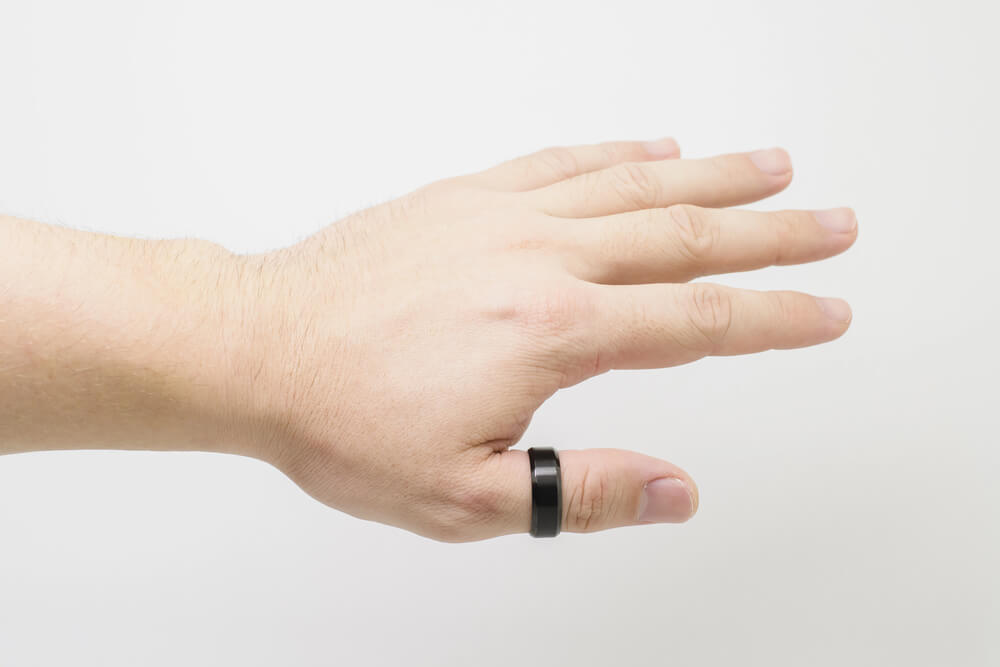
Black rings are another symbol associated with swinging. A black ring worn on the right hand is sometimes described as a discreet indicator that the wearer is open to non-monogamy. It’s subtler than lawn ornaments and appears somewhat more plausible, but it’s also just a popular jewelry style, and black silicone rings are common among people who work with their hands.
Some people believe using garden gnomes and placing plants in specific configurations indicates one’s openness to swinging. This is circulated in some European contexts; however, it has even less supporting evidence compared to the flamingo [6]. White landscaping rocks, specific mailbox colors, and the use of purple or teal porch lights are other symbols that are occasionally floated as symbols for swinging, but they also almost never survive scrutiny.
What all of these share is a structure: a mundane object, an alleged hidden meaning, and no verifiable origin. They function more as modern urban legends than as functioning communication systems.
Where Are Flamingo Symbols Commonly Seen?
Perhaps the most familiar place to encounter a plastic flamingo is in yard displays and gardens. That is hardly surprising considering the history of the Featherstone design. The original lawn ornaments were specifically developed for outdoor decoration, and later versions became an enduring feature of American popular culture.
But flamingos have traveled far beyond the lawn.
They appear on holiday clothing, swimwear, party decorations, greeting cards, drinkware, hotel decor, wallpapers, pool floats, jewelry, tattoos, social media graphics, and countless novelty products. Their tropical association also makes them especially common around pools, beaches, summer parties, resorts, and warm-weather events.
Flamingos can additionally appear at adult-oriented parties, clubs, campsites, cruises, or lifestyle gatherings. In one of those settings, surrounding clues might shed light on what the bird means.
Final Thoughts
The flamingo-as-swinger-signal story is fun and endlessly shareable; this is precisely why it spread. But fun and “true” aren’t the same thing. While the origin is uncertain, it leans toward an internet-born interpretation that a small number of people may have adopted after the fact, rather than an established practice within the lifestyle.
To avoid awkward misunderstandings, unnecessary embarrassment, or even accidentally offending someone, it may be wise not to approach strangers based on their lawn decor. If you’re curious about consensual non-monogamy, the real entry points are the same ones the community actually uses: vetted platforms, organized events, and direct conversation. Those work; bird-watching doesn’t.
And if you own a flamingo you simply like? Keep it. Nobody is reading it the way the internet says they are.
References:
- The Tacky History of the Pink Flamingo. By Abigail Tucker. Retrieved: September 18, 2026. Smithsonianmag.com.
- College prank elevates flamingo’s status. By Reuters. Retrieved: September 18, 2026. Reuters.com.
- Flamingos, Pampas and Pineapples… What does it all mean? Retrieved: September 18, 2026. Beyondthepineapple.blog
- Swinging (Sexual Practice). Retrieved: September 18, 2026. Wikipedia.org.
- What Do Upside-Down Pineapples and Flamingos Mean at a Campground? Retrieved: September 18, 2026. Hipcamp.com.
- Do Pink Flamingos Have a Secret Meaning? Get the Full Scoop Here. Retrieved: September 18, 2026. Wikihow.com.
Head Researcher